
As global attention to sustainability continues to grow, businesses of all sizes face increasing pressure to measure and reduce their carbon emissions. For small and medium-sized enterprises (SMEs), understanding Scope 1, Scope 2, and Scope 3 emissions is a critical first step toward achieving sustainability and meeting regulatory demands. These concepts form the foundation of frameworks like the Greenhouse Gas (GHG) Protocol and are central to compliance with requirements such as the EU’s Corporate Sustainability Reporting Directive (CSRD).
In an upcoming article, we’ll explore the basics of CSRD compliance, providing explanations along with some actionable insights. We’ll also explore how voluntary ESG reporting can benefit SMEs, particularly in meeting the sustainability requirements of their larger clients. Before diving into these topics, it’s essential to clarify what Scope 1, 2, and 3 emissions entail and why they are critical for SMEs aiming to align with global sustainability standards.
The Greenhouse Gas (GHG) Protocol is a widely recognized framework for measuring and managing greenhouse gas (GHG) emissions across organizations, sectors, and countries. It is a collaborative initiative developed by the World Resources Institute (WRI) and the World Business Council for Sustainable Development (WBCSD). Established in 1998, it aims to create globally accepted standards for GHG accounting and reporting to promote sustainability and climate action.
This article provides a comprehensive breakdown of emissions categories, why they matter, and actionable steps SMEs can take to manage them effectively.
What Are Scope 1, 2, and 3 Emissions?
The GHG Protocol categorizes emissions into three scopes to help businesses identify and manage their environmental impact systematically:
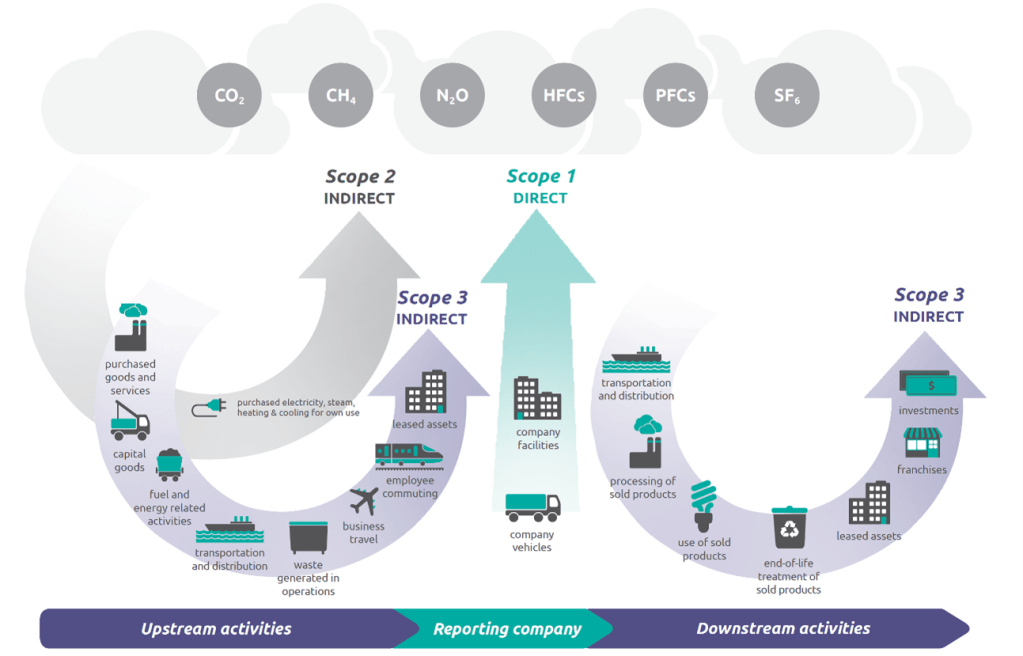
Scope 1, 2 and 3 Emissions. Source: WRI/WBCSD Corporate Value Chain (Scope 3) Accounting and Reporting Standard (PDF), p. 5
Let’s break down the different emission scopes and illustrate each with examples of typical cases.
1. Scope 1: Direct Emissions
Definition: These are emissions directly produced by a company’s activities, such as fuel combustion in assets it owns or controls.
- Examples:
- A small bakery using natural gas to power its ovens.
- A landscaping business operating fuel-powered lawnmowers, leaf blowers, and other equipment.
- A local logistics company running a fleet of delivery vans or trucks fueled by gasoline or diesel.
- A craft brewery using propane for heating kettles in its brewing process.
- A small hotel relying on on-site boilers for heating water or rooms.
- Relevance to SMEs:
Scope 1 emissions are typically easier for SMEs to measure and control compared to Scope 2 and 3, as they relate to activities the business directly undertakes. For instance, switching to electric vehicles (EVs), optimizing fuel usage in operations, or upgrading equipment to more energy-efficient models can significantly reduce these direct emissions.
Scope 2: Indirect Emissions from Energy
Definition: These emissions result from the production of energy (such as electricity, heating, or cooling) that a company purchases or acquires and consumes but does not produce itself.
- Examples:
- A boutique clothing store purchasing electricity from a utility provider that generates power from coal or natural gas.
- A small manufacturing company relying on district heating for its production facility.
- A local café running on grid-supplied electricity for lighting, refrigeration, and coffee machines.
- A co-working space using air conditioning and heating powered by electricity from fossil fuel sources.
- Why It’s Important:
SMEs can significantly lower Scope 2 emissions by making energy-efficient choices. For example, installing LED lighting, upgrading to energy-efficient appliances, or switching to renewable energy sources like solar power or green electricity contracts can reduce these indirect emissions.
Scope 3: Value Chain Emissions
Definition: These are all other indirect emissions that occur throughout a company’s value chain, both upstream and downstream, excluding those from purchased energy (Scope 2).
- Examples:
- Upstream:
- A bakery purchasing flour and packaging materials (emissions stem from the production and transportation of these goods).
- A tech start-up relying on cloud computing services which generate emissions from data center operations.
- A small furniture maker sourcing timber, with emissions arising from logging, processing, and delivery.
- Downstream:
- A local beverage company’s products being refrigerated by customers, adding emissions during their use phase.
- A retail store’s clothing products disposed of in landfills, contributing to waste-related emissions.
- Upstream:
- Challenges for SMEs:
- Data Complexity: Measuring Scope 3 emissions is difficult as it requires detailed, often external, data from suppliers, transporters, and customers. SMEs typically lack the resources or influence to easily gather this information.
- Significance: Despite the complexity, Scope 3 often constitutes the largest portion of an SME’s carbon footprint, accounting for 70% or more of their total emissions (depending on the sector).
- Why It’s Important:
Addressing Scope 3 emissions can unlock opportunities for innovation and collaboration. For example:- Partnering with suppliers who prioritize low-carbon practices can reduce emissions across the supply chain.
- Engaging customers on product disposal or recycling initiatives promotes sustainable behavior and reduces downstream impacts.
By understanding and tackling Scope 3 emissions, SMEs can significantly enhance their sustainability profile, aligning with current and future regulatory expectations and meeting growing consumer demand for transparency and accountability.
Why SMEs Should Act Now
Understanding and managing emissions isn’t just about regulatory compliance. Proactively tackling your carbon footprint brings tangible business benefits:
- Cost Savings: Energy efficiency and waste reduction lead to lower operational costs over time.
- Market Positioning: A sustainability-focused approach enhances brand reputation.
- Future-Ready: Preparing now simplifies compliance with evolving requirements and regulations.
- Attracting Investment: ESG-conscious investors prioritize businesses with clear sustainability goals.
The Path Forward
Understanding Scope 1, 2, and 3 emissions is no longer optional for SMEs—it’s a business imperative. These categories form the foundation of sustainability efforts, and evolving regulations will likely demand detailed reporting and standardized practices. By starting now to measure, manage, and reduce emissions, SMEs can not only be compliant but also unlock operational efficiencies, enhance stakeholder trust, and position themselves as leaders in a greener, more competitive business landscape. Now is the time to act and embrace sustainability as a cornerstone of long-term success.
Stay tuned for our next article, where we’ll delve into the basics of CSRD compliance and how relevant this regulation is to small and medium-sized businesses.
 Steps to Sustainable Business
Leave a comment