The Value of Waste Reduction
For small businesses, minimizing waste is not only a cost-effective strategy but a powerful way to enhance environmental responsibility and public image. With the EU countries generating approximately 2.2 billion tonnes of waste annually (about 5 000 kg per capita) and only around 40% of it being recycled, it’s clear that waste management is a pressing issue that affects all levels of business. Reducing waste in small businesses can lead to significant cost savings, improved operational efficiency, and a strong appeal to eco-conscious customers.
This guide explores how small businesses can tackle waste reduction across operations, offering straightforward steps and industry-specific examples to get started.
1. Assess Your Waste Output
Analyze Waste Sources: Start by identifying the primary sources of waste within your business. For example, an e-commerce business may typically generate a high volume of packaging waste, while a restaurant may produce significant food waste. Use the help of downloadable guides and checklists.
Conduct a Waste Audit: A simple waste audit is a powerful first step. Track your waste output over a set period (e.g., a month) to identify high-waste areas, such as excess inventory, disposable materials, or inefficient production processes. Consider waste quantities and composition, but also try to take a critical look at the effectiveness of your current waste collection and management system. Performing a waste audit may help you identify some “quick win” measures towards waste reduction.
 Tip for Waste Audits: Leverage Digital Tools
In addition to manually tracking waste, consider using digital tools to streamline your waste audit process. There are various software available that help businesses track waste generation, categorize materials, and identify trends over time. These tools can help automate data collection, saving time and improving accuracy. This allows businesses to make data-driven decisions for waste reduction and track improvements more efficiently.
2. Streamline Processes to Minimize Operational Waste
Implement Efficiency Optimization Techniques: Efficiency optimization can help businesses reduce waste by eliminating inefficient steps and streamlining processes. These principles apply not only to manufacturing but also to service-based businesses. For example, hair salons can reduce water waste by investing in water-efficient washing stations or faucets, while bakeries can lower ingredient waste by batch-preparing items based on demand forecasts.
Inventory Management: Effective inventory management minimizes waste by reducing expired, unsold, or obsolete products. Digital inventory systems or regular cycle counts help you keep track of stock and order only what’s needed.
Tip for Bakeries: Proactively Engage with Customers Educate your customers about your bakery’s commitment to sustainability and encourage them to be more conscious consumers. For products with a shorter shelf life or nearing their “use-by” date, offer discounts or promotions to help reduce waste while boosting sales. You can also implement a pre-order system or allow customers to request smaller quantities, ensuring that production aligns more closely with demand and minimizing waste.
3. Optimize Packaging for Sustainability
Packaging waste contributes significantly to environmental degradation, particularly single-use plastics. Opting for sustainable packaging materials or minimalistic packaging design can be a key differentiator for small businesses.
Sustainable Packaging Choices: Explore alternatives to traditional packaging, such as compostable mailers, recycled paper, or reusable materials. Third-party certifications, such as Forest Stewardship Council (FSC) for paper or Cradle to Cradle for materials, help ensure the sustainability of packaging choices.
Minimize Packaging Design: For e-commerce and shipping-heavy businesses, consider minimalist packaging that reduces both cost and material use. When receiving goods, encourage suppliers to use recyclable or reusable packaging when delivering them to you.
Tip for Packaging Optimization: Right-Sizing
An essential aspect of packaging optimization is right-sizing. Often, products are shipped in boxes that are larger than necessary, leading to wasted space and increased shipping costs. By using packaging that is specifically tailored to the product’s dimensions, businesses can minimize excess material use, reduce shipping volume, and save on both packaging costs and carbon footprint. This approach not only cuts waste but also enhances operational efficiency, such as in this case study by Amazon.
4. Establish a Recycling Program Across the Business
Establishing a robust recycling program can help streamline waste management, particularly in offices and customer-facing spaces.
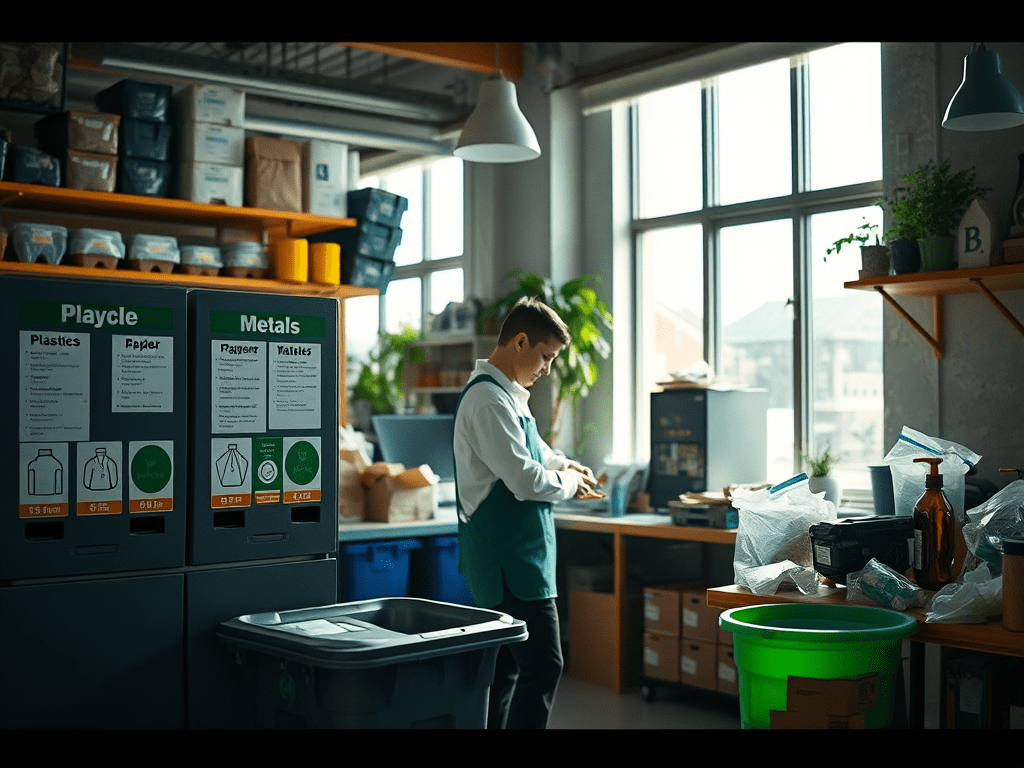
Comprehensive Recycling Stations: Set up clearly labeled recycling bins in convenient locations for different materials, such as plastics, paper, and metals. Include instructions to avoid contamination by mixing non-recyclables.
Specialized Recycling: Some industries produce unique waste types that require specialized recycling, such as electronic waste (e-waste) in tech or salons and spas that handle hazardous beauty products. Research local recycling services that can handle these materials sustainably.
Tip for Offices: Centralized Recycling Stations
Rather than providing individual bins for each desk, consider setting up centralized recycling stations in common areas. Place separate bins for paper, plastics, and general waste in easy-to-access locations such as kitchens, hallways, or near printers. This encourages employees to actively sort their waste rather than toss everything into a general bin under their desks. It not only increases recycling rates but also reduces the overall amount of general waste generated.
5. Engage Employees and Build a Culture of Waste Reduction
Employee involvement is crucial for making waste reduction a long-term business practice. Educating and empowering employees ensures that waste reduction becomes an integrated part of the business culture.
Create a “Green Team”: Form a group within the business dedicated to sustainability initiatives, such as finding ways to reduce waste in daily operations or organizing recycling efforts.
Host Zero-Waste Challenges: Consider a “Zero-Waste Month” where teams compete to reduce waste, measure results, and celebrate wins. Small rewards or team recognitions can add an element of fun and encourage participation.
Tip for Zero-Waste Month: Involve the Community
To maximize the impact of a Zero-Waste Month, consider extending the challenge beyond your internal team to engage the local community or customers. Invite customers to participate in waste-reduction initiatives, such as bringing their own reusable bags or containers when visiting your business. Offer small incentives or discounts for participation and create a friendly competition with rewards for the team or customer who reduces the most waste. This not only increases awareness but also fosters a sense of community around sustainability.
6. Track Progress and Celebrate Small Wins
Set Measurable Goals: Begin with realistic, achievable targets, like reducing waste by 10% within six months. Track progress regularly, using data to make improvements as needed.
Publicize Milestones: Share progress on your website, through social media, or in newsletters to increase transparency. This not only engages customers but also builds brand trust, as consumers appreciate businesses committed to sustainable practices.
Tip for Tracking Progress: Use Visual Progress Tracking Tools
To keep track of waste reduction goals and celebrate milestones, use visual tools like charts, graphs, or infographics that show progress over time. Display these in common areas of the workplace or on internal dashboards to keep employees motivated and engaged. Whether it’s a simple bar chart showing waste reduction by month or a larger infographic highlighting key sustainability milestones, visual tracking helps create a sense of accomplishment and makes the impact of everyone’s efforts tangible.
 A Success Story: ECOS, an eco-friendly cleaning products company, achieved Platinum Zero Waste certification at its facilities. In 2020, their Lacey, Washington plant diverted 98% of waste from landfills, recycling 98 tons and reusing 570 tons, resulting in $68,000 saved on waste disposal costs.
Conclusion: Small Changes, Big Impact
Waste reduction is a gradual process, but each small step adds up, making a significant positive impact over time. By following these steps, small businesses can reduce waste-related costs, foster a culture of sustainability, and enhance customer trust. As businesses begin their journey toward a more sustainable future, the rewards—in both financial savings and reputation—are well worth the effort.

 Steps to Sustainable Business
Leave a reply to Sustainability Glossary Series: Part 5 (Sustainable E-Commerce Concepts) – Steps to Sustainable Business Cancel reply